When Survival Mode Becomes a Cage: The Hidden Cost of the Bootstrapper's Mindset at Scale

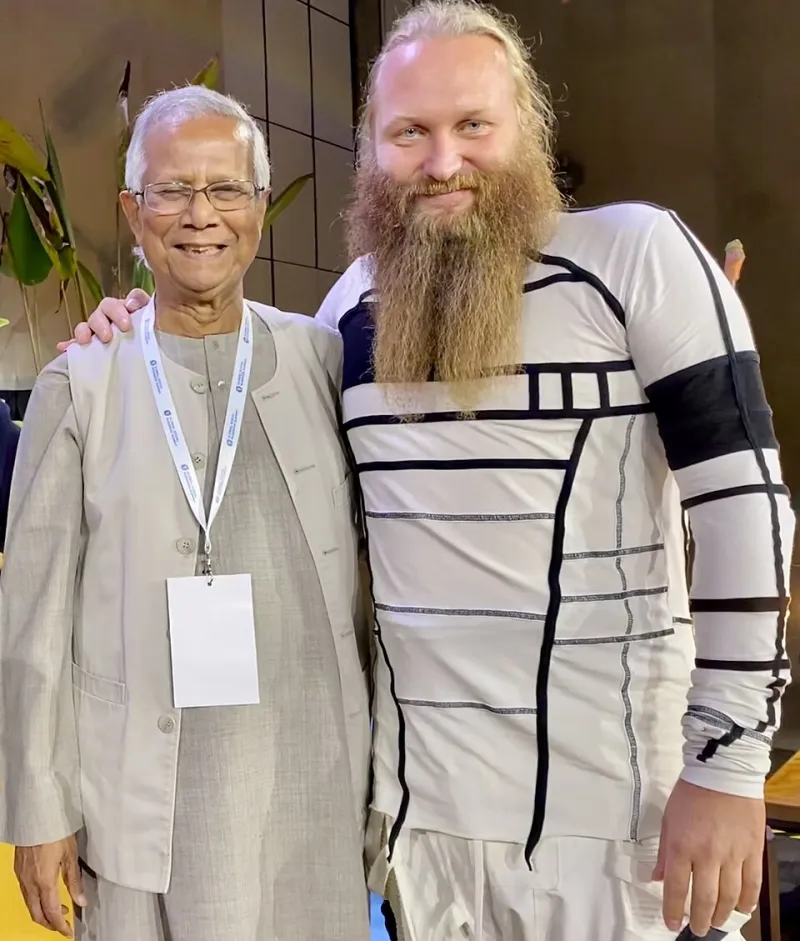
Photo: John Medina, CC BY-SA 4.0, via Wikimedia Commons
The Skills That Built the Foundation May Not Build the Tower
There is a particular kind of pride that comes with bootstrapping a company. Every dollar stretched, every hire delayed, every vendor negotiation won—these are not merely financial decisions. They are identity-forming experiences that shape how a founder sees the world and, more importantly, how they see themselves. The problem is that identity, when left unexamined, has a way of calcifying into limitation.
Across the entrepreneurial landscape, a pattern emerges with striking consistency: the very traits that allow founders to survive the early stages of building a business become the primary obstacles when that business begins to scale. Frugality curdles into chronic underinvestment. Decisive independence hardens into an inability to delegate. Scrappiness, once a competitive weapon, transforms into a cultural ceiling that talented employees eventually hit—and leave.
This is the founder's paradox. And for many leaders, it goes undiagnosed until the damage is already measurable.
The Frugality Trap
Consider the story of a Midwest-based software founder who grew her company from a two-person operation to a 40-person firm entirely through revenue. Every expenditure was scrutinized. Every subscription audited. The discipline was extraordinary, and it worked—until it didn't.
When the company reached the stage where enterprise clients required dedicated account management, she resisted hiring. When a CFO was clearly needed, she continued managing the books herself. When marketing needed a proper budget to compete for larger contracts, she allocated the minimum. The instinct was familiar: protect the margin, control the spend, trust yourself before you trust anyone else.
The result was not collapse—it was stagnation. Revenue plateaued. Key employees departed for companies where investment in people and systems was more visible. Clients began questioning capacity. What had once been admirable discipline was now indistinguishable from institutional timidity.
The frugality trap does not announce itself. It masquerades as prudence right up until the moment it reveals itself as fear.
The Control Paradox
Self-reliance is perhaps the most celebrated entrepreneurial virtue in American business culture. The lone builder, the solo decision-maker, the leader who doesn't need a committee to act—these archetypes are romanticized for good reason. In the early stages of a company, speed and decisiveness are existential advantages.
But scale requires something fundamentally different: distributed authority. And for founders who built their identity around personal control, that transition is less a business decision than a psychological confrontation.
Research consistently shows that executive bottlenecks are among the leading causes of mid-stage company stagnation. When every significant decision routes through a single person—regardless of how capable that person is—the organization's velocity is permanently capped. Teams stop developing judgment because they know decisions will be reversed or overridden. Initiative atrophies. The very talent a founder worked to recruit begins operating below its potential.
One founder who successfully navigated this transition described it plainly in a recent leadership forum: "I had to accept that my presence in every decision was not a sign of strength. It was a sign that I hadn't built anything durable yet."
Recognizing the Ceiling Before You Hit It
The challenge with the bootstrapper's mindset is that it produces results right up until the moment it produces consequences. There is rarely a clean warning. The signals tend to be subtle and easy to rationalize: a promising hire who leaves after eight months, a strategic opportunity that passed while approvals were pending, a board conversation that keeps circling back to the same operational concern.
Leaders who have successfully made this transition offer a consistent framework for self-assessment. First, audit your decision log. If the majority of decisions that required your input in the past quarter could have been made by someone else with the right authority and information, you have a delegation deficit. Second, examine your investment hesitations. When you resist spending, is the resistance grounded in financial analysis or in the emotional memory of scarcity? Those are different problems with different solutions. Third, ask your senior team directly: where do they feel slowed down by the need for your approval? Their answers will be more instructive than any consultant's report.
The Rewiring Process
Rewiring the founder's operating system is not a weekend exercise. It requires sustained intention and, in most cases, outside perspective—whether through a peer advisory network, an experienced board member, or an executive coach who has guided other founders through the same transition.
The practical work involves several deliberate shifts. Replacing approval structures with accountability structures. Building financial models that treat strategic investment as a growth variable rather than a threat to survival. Creating space for senior leaders to fail forward, which is the only way genuine organizational capability develops.
Perhaps most critically, it requires a founder to separate their personal identity from the company's operational mechanics. The business is not an extension of the founder's willpower. At scale, it must become an institution with its own systems, culture, and decision-making capacity. The founder's job is to architect that institution—not to personally inhabit every corner of it.
The Competitive Advantage That Must Evolve
None of this is an argument against the bootstrapper's mindset. The discipline, resourcefulness, and conviction it produces are genuinely rare and genuinely valuable. The point is not to abandon those traits but to evolve their expression.
Frugality, applied at scale, looks like capital allocation strategy rather than expense avoidance. Self-reliance, matured, looks like building teams capable of independent excellence rather than personal involvement in every outcome. Scrappiness, channeled correctly, becomes an organizational culture of creative problem-solving rather than a founder's personal habit.
The founders who successfully cross this threshold are not those who forget where they came from. They are the ones who understand that the next stage of the journey requires a different version of themselves—one built on the same values but operating through fundamentally different methods.
That evolution is not a betrayal of the original vision. It is, in fact, its fullest expression.