Outgrowing Your Origin Story: How to Evolve Beyond the Investors Who Believed in You First
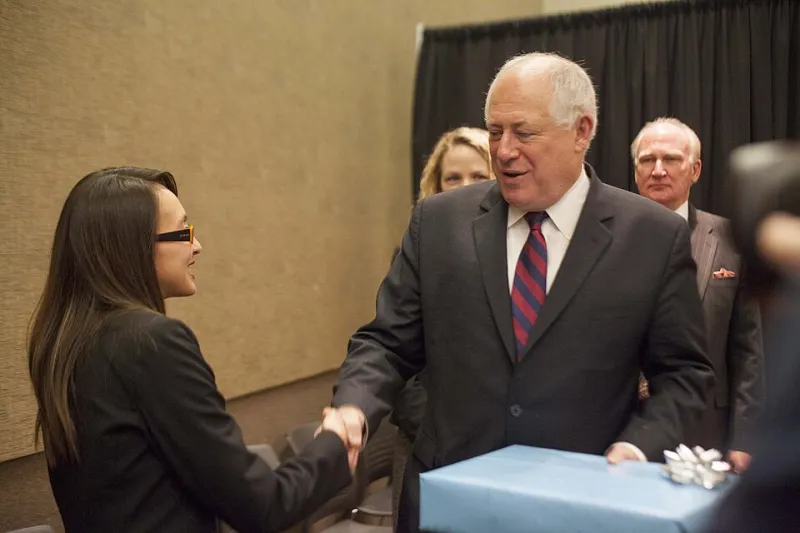
Photo: COD Newsroom, CC BY 2.0, via Wikimedia Commons
The Debt That Never Appears on a Balance Sheet
There is a particular kind of obligation that does not show up in any financial statement. It is the weight a founder carries toward the people who believed in the business before there was much to believe in. The angel investor who wired funds from a personal account. The former colleague who wrote a check on faith alone. The family friend who said yes when every institutional door was closed.
That loyalty is not irrational. In many respects, it is admirable. But left unexamined, it can become one of the most quietly destructive forces in a scaling company's trajectory.
At iYard, we hear this story with remarkable consistency from founders at the growth stage: a sense of obligation to early backers that has begun to distort decision-making, slow strategic pivots, or crowd out the perspectives the business actually needs at this stage of its development.
When Gratitude Hardens Into Governance
The problem rarely announces itself. It tends to arrive gradually, disguised as loyalty and consideration.
A founder continues to seek approval from an early investor whose industry experience predates the current market by a decade. A board seat extended as a courtesy in year one now carries veto weight in year four. An advisor who was indispensable during the launch phase is still receiving sensitive strategic information despite having no relevant expertise in the company's current direction.
In each of these scenarios, the relationship itself is not the issue. The issue is that the relationship has not been renegotiated as the business has changed. And founders, often out of genuine warmth or conflict avoidance, delay that renegotiation until the cost becomes undeniable.
Research from the Kauffman Foundation has long indicated that governance misalignment—not market conditions—is among the most common contributors to stalled growth in founder-led companies. Early investors who are not recalibrated to a new strategic reality can, however unintentionally, anchor a company to assumptions that no longer hold.
The Invisible Ceiling
Consider what this dynamic looks like in practice. A founder preparing for a Series B round continues to loop in a seed-stage backer whose network and appetite for risk are firmly in the pre-revenue world. The backer, operating from genuine concern and historical context, counsels caution at precisely the moment the business needs boldness. The founder, reluctant to appear ungrateful, moderates the pitch accordingly.
The round closes smaller than it should have. The opportunity cost is never fully calculated because the ceiling was never visible.
This is the loyalty trap in its most common form. It does not feel like a trap. It feels like respect.
Graceful Evolution Is a Leadership Skill
The good news is that outgrowing an early relationship does not require ending it. What it requires is the willingness to redefine it—clearly, honestly, and without apology.
The most effective founders treat this as a leadership conversation rather than a breakup. They acknowledge the history explicitly. They articulate the company's current needs with precision. And they offer the early supporter a meaningful, if different, role in the ongoing story.
An early investor who is no longer suited for board participation may be an exceptional brand ambassador, a connector to a specific community, or a reference for future fundraising. Repositioning that relationship is not a demotion. It is an act of strategic clarity that, when handled well, tends to be received with more understanding than founders expect.
The key is to have the conversation before resentment accumulates on either side. Founders who wait until the relationship has become openly dysfunctional lose the goodwill that would have made the transition graceful.
Mapping the Inner Circle With Intention
A useful discipline for any founder navigating this terrain is what some leadership coaches call the "strategic proximity audit"—a deliberate, periodic review of who occupies the inner circle and whether each person's presence is earning its place.
This is not a cynical exercise. It is a recognition that the people closest to a founder's decision-making have an outsized effect on the quality of those decisions. The inner circle at the seed stage was assembled for seed-stage problems. The inner circle at the Series B, the expansion phase, or the exit conversation should be assembled for the challenges that actually exist today.
Asking the following questions with honesty can be clarifying: Does this person understand our current market well enough to challenge my assumptions? Do their incentives align with the direction we are heading? Am I sharing information with them out of obligation or because their input genuinely improves my thinking?
The answers are rarely comfortable. But they are almost always useful.
Loyalty Toward the Mission
There is a reframe that many seasoned founders find useful when navigating these transitions: the deepest loyalty a founder can demonstrate is not to the individuals who supported the business at a particular moment in time. It is to the mission itself—and to the team, customers, and stakeholders who depend on that mission being executed well.
From that vantage point, making hard choices about who belongs in the inner circle at each stage of growth is not a betrayal of early supporters. It is the fulfillment of the very ambition they funded.
The investors and advisors who genuinely believed in you will, more often than not, understand this. They took a risk on a founder, after all. Watching that founder exercise mature, unsentimental judgment about the business is, in many respects, exactly what they were hoping to see.