Shadow Maps: How Top Entrepreneurs Decode the Invisible Power Structures That Actually Run Their Industries

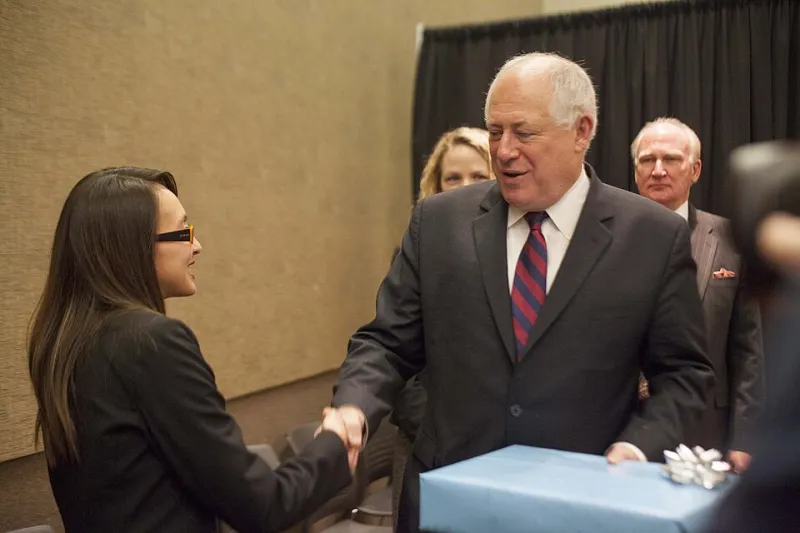
Photo: Cpl. Royce Dorman, Public domain, via Wikimedia Commons
The Org Chart Nobody Publishes
Every industry maintains two organizational charts. The first is the one that appears in press releases and LinkedIn profiles—the official hierarchy of titles, divisions, and reporting structures. The second is the one that actually determines how things get done. It lives in text message threads, at private dinners, and in the relationships built over years of shared context that no public record can capture.
For entrepreneurs attempting to build meaningful traction in any established sector, the distance between these two charts represents one of the most consequential knowledge gaps in business. Those who learn to read the second chart gain access to a layer of strategic intelligence that simply cannot be purchased, Googled, or extracted from any industry report.
At iYard, connecting entrepreneurs with the people and information that actually move markets is foundational to what we do. And one of the most consistent observations from leaders across our network is this: the most valuable connections in any industry are rarely the most visible ones.
Why Formal Titles Mislead
There is a natural human tendency to equate authority with title. We assume that the CEO controls the decision, that the managing partner signs off on the deal, that the department head owns the relationship. And in some cases, that assumption holds.
But in practice, organizational power is far more diffuse and far more human than any formal structure suggests. A senior vice president who has been with a company for two decades may carry more actual influence over a major procurement decision than the newly appointed chief executive. A mid-level analyst who served as chief of staff to three consecutive executives may have informal veto power over vendor relationships that no title reflects.
More importantly for entrepreneurs seeking to enter new markets or close significant partnerships: there are often individuals outside the target organization entirely—former executives, trusted advisors, well-connected investors, or even journalists—whose informal endorsement can accelerate or derail a relationship before the first formal meeting is ever scheduled.
These are the people that sophisticated networkers learn to identify and cultivate. And they are almost never the people whose names appear on the company website.
The Architecture of Informal Influence
Mapping informal power structures is part research, part social intelligence, and part patient observation. It begins with a willingness to look beyond the obvious.
Several consistent patterns emerge among the entrepreneurs who do this well. First, they pay close attention to who gets mentioned in passing during conversations—particularly when the mention is unprompted. When multiple people in a given ecosystem independently reference the same individual as someone worth knowing, that is a signal worth investigating regardless of that person's official role.
Second, they study the connector class: individuals who appear at the intersection of multiple networks without necessarily dominating any single one. These connectors often have influence precisely because they are trusted across different communities. A well-regarded attorney who has represented both sides of a major industry transaction, a nonprofit board member who moves comfortably between the startup world and established institutional players, a former regulator who now advises both government and private sector clients—these are the kinds of figures whose introductions carry disproportionate weight.
Third, they trace the origin of major deals and relationships backward. When a significant partnership or acquisition is announced, the public narrative rarely captures the actual sequence of events. Asking discreetly how the parties first connected, who made the introduction, and whose credibility was on the line tends to reveal a much richer picture of how influence actually flows in that ecosystem.
Building Authentic Relationships With the Invisible Tier
Identifying informal power nodes is only half the challenge. The more nuanced skill is building authentic relationships with people who are, by definition, accustomed to being approached transactionally.
The fundamental error most networkers make when targeting high-influence individuals is leading with need. They arrive with an ask—an introduction, an endorsement, a meeting—before they have established any basis for trust. In a world where genuinely influential people receive dozens of such approaches, this approach is not merely ineffective. It is actively counterproductive, as it signals a lack of understanding about how influence actually works.
The founders who succeed in building relationships with this tier share a different orientation. They approach with curiosity rather than agenda. They invest time in understanding what the other person values, what challenges occupy their attention, and where their own knowledge or network might be genuinely useful. They give before they ask, and they ask with specificity when the moment is right.
This is not manipulation. It is the basic grammar of relationship-building at the highest levels—a grammar that requires patience, genuine interest, and a long time horizon.
The Compounding Return of Social Capital
One of the most important properties of informal influence networks is that they are self-reinforcing. A single authentic relationship with a well-placed connector tends to generate introductions, context, and credibility that would have taken years to accumulate independently. Those introductions, handled well, generate further relationships. The map expands.
Conversely, a misstep in this tier—an approach perceived as purely transactional, a confidence betrayed, a relationship treated as a means rather than an end—can close doors that were never technically open to begin with.
This asymmetry is worth internalizing. In formal networks, a failed connection is simply a failed connection. In informal influence networks, how you treat each relationship signals to the entire connected community what kind of actor you are.
Reading the Room Before You Enter It
For entrepreneurs preparing to enter a new market, raise a significant round, or pursue a major strategic partnership, the most valuable preparation is rarely the pitch deck. It is the intelligence-gathering that happens before any formal meeting is scheduled.
Who are the three or four people whose informal endorsement would make this easier? What are their actual priorities right now? Who in your existing network has a genuine, trusted relationship with any of them? And what can you offer—insight, connection, value of any kind—that would make an introduction feel like a gift rather than a burden?
These are the questions that separate founders who navigate industries efficiently from those who spend years knocking on the wrong doors.